
Oneroad,twowinds
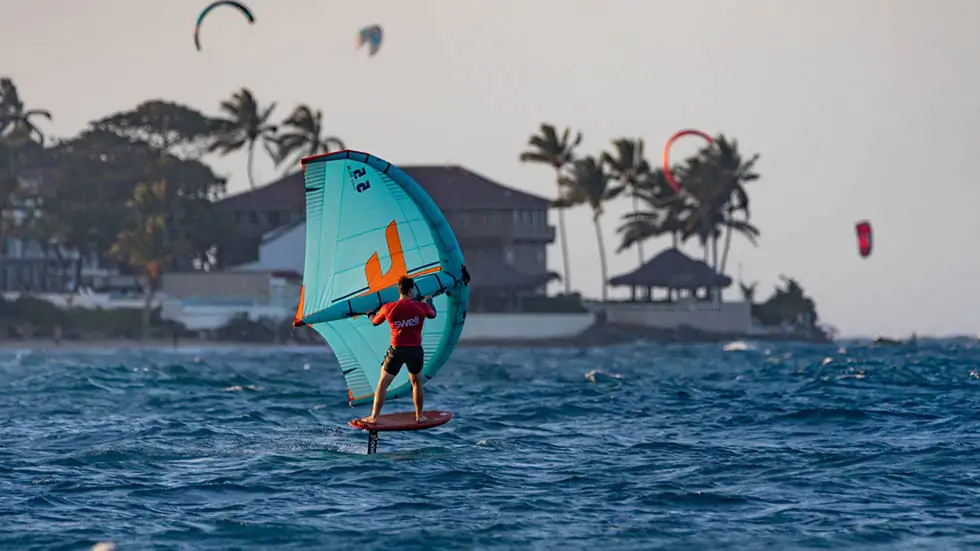
A surf town built along a single bay: surfers at one end, kiters at the other, and everyone on the sand in the evening.
How the town is laid out
Cabarete is a single main road running along the back of a bay, with restaurants and bars opening straight onto the sand. Everything is walkable. From west to east: Encuentro and the surf schools (ten minutes out of town), Kite Beach and the kite schools, the town centre with the beach restaurants, and the quieter eastern end towards La Boca.
There is no old town and no sights to tick off. The town is the beach, and the day has a shape: surf before the wind, lunch, kite or sleep through the wind, then the whole town migrates to the sand for the last hour of light.
For surfers
Guesthouses, camps and quiet; a moto or a ten-minute drive from the restaurants.
For wind sports
Schools, rentals and the afternoon crowd; walk into town along the beach.
For everyone
Beach restaurants, bars, the supermarket and the bank. Livelier at night.
Money, phones, moving around
Pesos and dollars
Dominican pesos everywhere, US dollars accepted at most tourist places at a worse rate. There are ATMs on the main road; cards work in restaurants and schools, rarely at the beach stalls.
Local SIM
A local SIM with data is cheap and sold on the main road. Coverage is good in town and patchy on the coast road east.
Motoconcho, guagua, taxi
Motorbike taxis are the local way for short hops; the guagua minibuses run the coast road between Sosúa and Río San Juan; taxis for the airport and nights out.
Drink bottled
Tap water is for showers. Big refillable bottles are sold everywhere.
Ordinary care
Cabarete is relaxed; use the common sense of any beach town after dark and do not leave bags on the sand at Mañanero.
Spanish, and plenty of English
English is spoken in the schools and restaurants. A few words of Spanish go a long way at the guagua stop.
What a Cabarete day looks like
 Dawn patrol
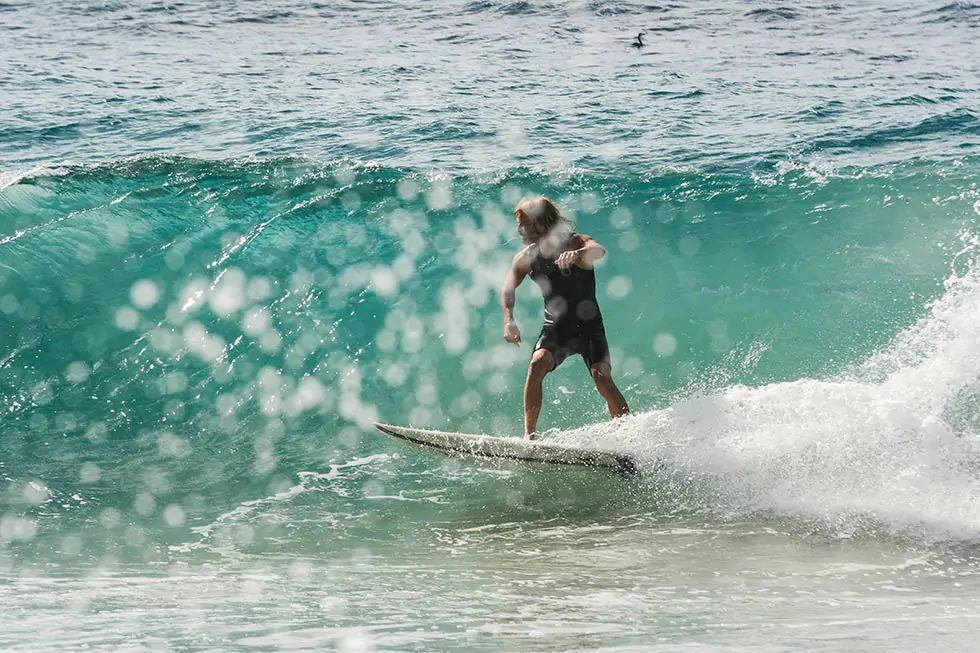
Encuentro before the wind. The schools open at seven; the glass lasts until about ten.
Dawn patrol
Encuentro before the wind. The schools open at seven; the glass lasts until about ten.Surf 11:00
 Breakfast, then nothing
The trade wind arrives. Eat, sleep, read. Nobody fights it.
Breakfast, then nothing
The trade wind arrives. Eat, sleep, read. Nobody fights it.Town 14:00
The wind takes over
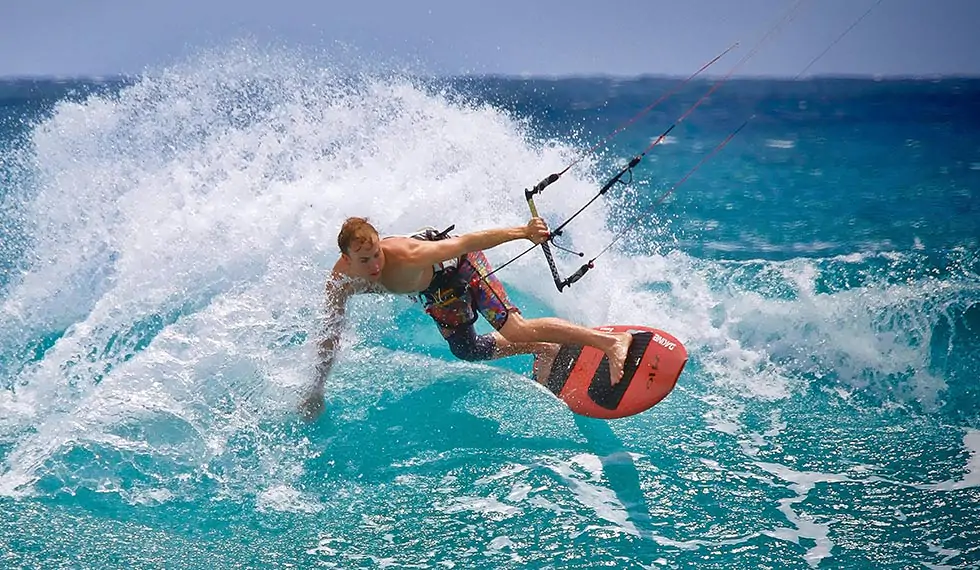
Kite Beach fills with kites and wings until the light goes.Wind 18:00
 The beach, for everyone
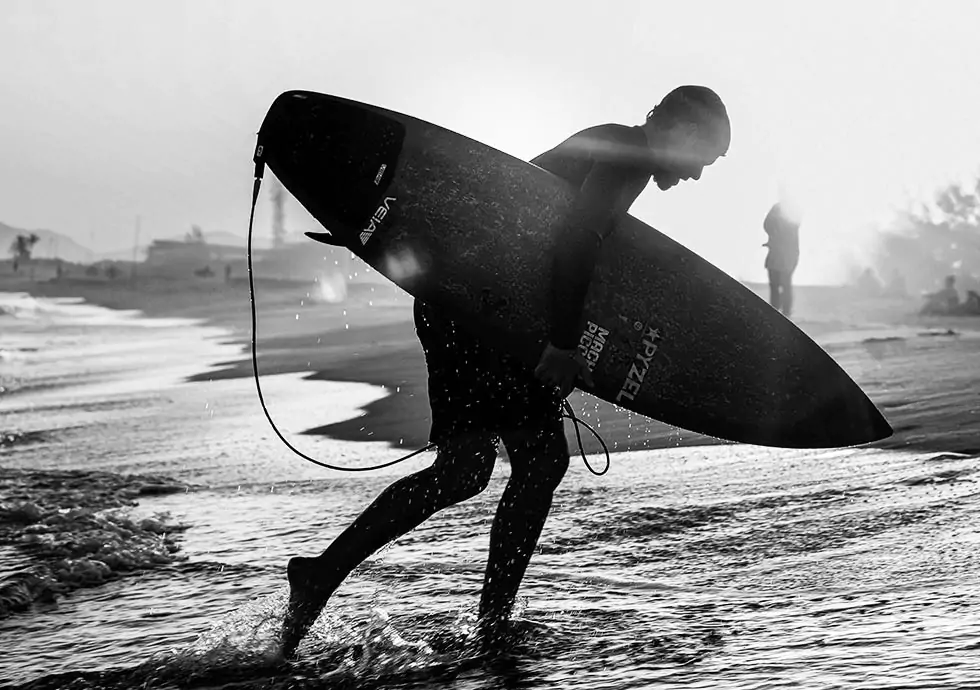
Tables on the sand, feet in it. The town’s one ritual.
The beach, for everyone
Tables on the sand, feet in it. The town’s one ritual.Evening