
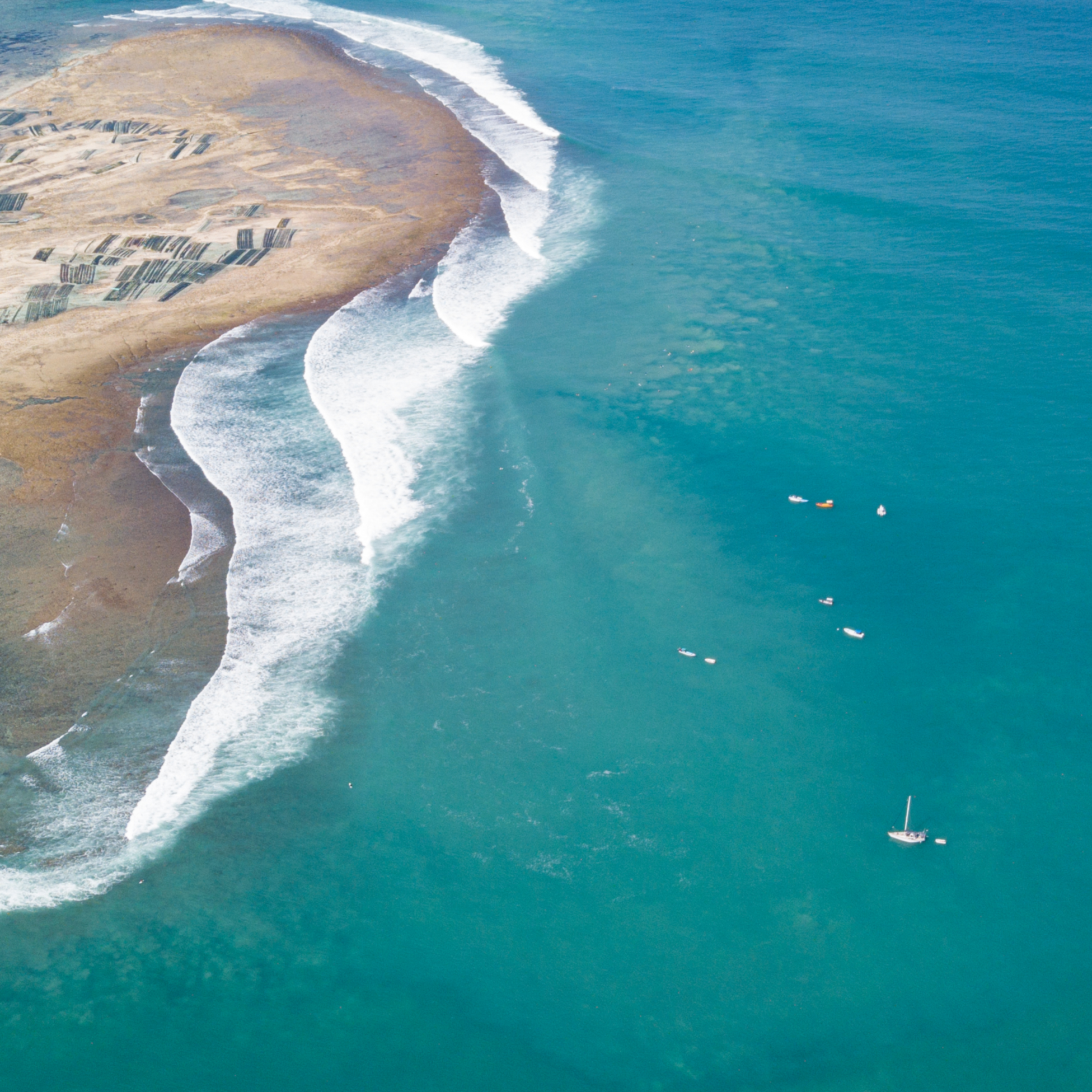
Rote Island, Indonesia
Rote (Pulau Rote) is the southernmost inhabited island of Indonesia, in East Nusa Tenggara, a two-hour ferry or thirty-minute flight from Kupang on Timor. This guide covers the island from our front wall at Nemberala: the village, the food, the customs, the seasons and the logistics, with sources.
Rote at a glance
Sixteen facts to settle the arguments. Every figure is from the regency government, Statistics Indonesia (BPS) or the sources listed at the end of this page.
- Name
- Pulau Rote, also written Roti. Part of Rote Ndao Regency, East Nusa Tenggara province, Indonesia. Source
- Where
- Between the Savu Sea and the Indian Ocean, about 16 km south-west of Timor and roughly 500 km from mainland Australia. Source
- Size
- 1,280 km² for the regency's 107 islands (8 inhabited); the main island is about 980 km², 80 km long and up to 23 km wide. Source
- Capital
- Ba'a, on the north coast: port, airport, hospital and banks. 45–60 minutes by car from Nemberala. Source
- Southernmost point of Indonesia
- Ndana (Pamana) Island, 11°00′ S, off Rote's south-western tip. Rote itself is the southernmost inhabited island of any size. Source
- Nemberala
- Village on the west coast in Rote Barat district, 10°53′ S 122°49′ E. Home of the T-Land reef and most of the island's lodges. Source
- Languages
- Rotenese dialects at home; Kupang Malay and Indonesian in town; English at the lodges.
- Time zone
- WITA, UTC+8, the same as Bali. No daylight saving.
- Money
- Indonesian rupiah, mostly cash. One ATM in Nemberala that often runs dry; reliable ATMs in Ba'a. Source
- Airport
- D.C. Saudale (RTI) near Ba'a, Indonesia's southernmost airport. About 30 minutes from Kupang by ATR 72. Source
- Seasons
- Dry April–November, wet December–March. Surf March–November, peak May–September.
- Wind
- South-east trade winds April–November, typically 12–20 knots and offshore at Nemberala.
- Dialling code
- +62 380. Emergency number 112.
Last verified September 2026.
Everything you need, in order
Start with where and when, then the village, then the practical pages. Skip straight to the FAQ if you only have five minutes.
- 01Rote at a glance
- 02Where is Rote Island?
- 03What Rote is famous for
- 04A short history of Rote
- 05People, language and faith
- 06Nemberala, the village at the end of the road
- 07Where to eat and drink in Nemberala
- 08Food and drink on Rote
- 09Local customs and etiquette
- 10Best time to visit Rote, month by month
- 11Getting to Rote
- 12Getting around Rote
- 13The surf, in brief
- 14Things to do on Rote
- 15Practical information
- 16Rote vs Sumba vs Bali
- 17Rote Island FAQ
- 18A Rote glossary
- 19Sources and references
Where is Rote Island?
Rote lies at the southern edge of Indonesia, in East Nusa Tenggara, about 16 km south-west of Timor and roughly 900 km east of Bali. Nemberala, on the west coast, faces the Indian Ocean. Ba'a, the capital and port, sits on the north coast looking across the strait to Kupang.
The island is long and low: about 80 km from the south-west tip to the north-east, up to 23 km wide, with hills in the middle that reach roughly 400 m. It is not volcanic. Rote is coral limestone lifted out of the sea by the collision of the Australian plate with the Banda arc; the island emerged only about 200,000 years ago and is still rising a millimetre or so a year. That is why the coast is a staircase of old reef terraces, why the reefs that make the waves are so well shaped, and why there are no rivers of any size.
The Savu Sea lies to the north and west, the Indian Ocean to the south, and the Pukuafu Strait separates Rote from Timor to the east. The fast ferry from Kupang crosses about 80 km of water. Australia’s Ashmore Reef is 150 km south; the Australian mainland is about 500 km away, which is why Rote’s fishermen and seaweed farmers were hit by an Australian oil spill in 2009.
Is Rote the southernmost island of Indonesia?
Almost. Rote is the southernmost inhabited island of any size, but the actual southernmost point of the country is Ndana (also written Pamana), a 14 km² island off Rote’s south-western tip that sits on the eleventh parallel south. It is uninhabited apart from a small marine detachment, and a statue of General Sudirman marks the spot. The ‘kilometre zero’ signs you will see near Oebi’ik and Bo’a are for the mainland of Rote, not the country. And note there are two Ndanas in the province: the other is off Sawu.
Rote or Roti?
Both. Portuguese records from the 1500s wrote ‘Rotes’; Dutch maps ‘Rotti’; ‘Roti’ was the official spelling for most of the twentieth century, and ‘Rote’ has been restored as the name of the island and the regency. Roti also means bread in Indonesian, which is a coincidence, not an origin. Locals sometimes call the island Nusa Lontar, the palm island, for the tree that shapes its economy.
What Rote is famous for
A wave, an instrument, a hat, a tree, a parallel of latitude and a turtle. If you remember these six, you know Rote better than most guidebooks.
T-Land
A left-hand reef point at Nemberala that runs 200–300 m on an ordinary day and 500 m or more on a big one, with a relatively gentle take-off. One of the longest lefts in Indonesia.
The sasando
Rote's own instrument: a bamboo tube strung with 28 to 56 strings, set inside a fan of dried lontar leaf. It is on the Rp 5,000 banknote and gives its shape to a landmark building in Kupang.
The ti'i langga hat
A wide-brimmed lontar-leaf hat with a tall crest at the front. Its nine tiers are said to stand for the island's eighteen traditional domains. Worn for ceremonies and dances.
The lontar palm
Borassus flabellifer covers more than 20,000 hectares of the regency. Its sap becomes tuak, syrup and cake sugar; its leaves become hats, buckets, roofs and sasando resonators.
Indonesia's southernmost point
Ndana Island, off Rote's south-western tip, sits on the 11th parallel south. A marine post and a statue of General Sudirman mark the spot.
The Rote snake-necked turtle
Chelodina mccordi lives only on Rote and is critically endangered, which is one reason the island's inland lakes matter beyond their looks.
A short history of Rote
Rote has been Christian and literate for longer than almost anywhere in eastern Indonesia, because a local ruler sailed to Batavia in 1729 and came back with schools. Before that, eighteen small domains; after that, Dutch treaties, teachers who spread across Timor, a regency of its own in 2002, and surfers from the 1980s.
-
Before 1500
Settlement and the domains
Rotenese tradition says the first settlers came from the north by way of Timor. The island was governed as a patchwork of small domains, nusak, each with its own lord. Older names for the island include Nusa Dahena. ↗
-
1500s
The Portuguese and a name
Portuguese Dominicans reached the island late in the sixteenth century. Island legend says a sailor asked a farmer where he was; the farmer, not understanding, gave his own name: Rote. Portuguese records write 'Rotes', later Dutch maps 'Rotti'. ↗
-
1662
First contracts with the Dutch East India Company
The VOC signed treaties with Termanu, Dengka, Korbaffo and Bilba. Over the following century it recognised eighteen domains, from Landu in the east to Delha in the west. ↗
-
1729–1732
Foeh Mbura sails to Batavia
The ruler of Thie led a party of Rotenese to Batavia in a boat called Sangga Ndolu. He came home baptised, with permission to open the island's first schools. Rote's unusual school tradition starts here. ↗
-
1700s–1800s
Teachers, clerks and soldiers
Malay-language Christian schooling gave Rotenese an educational head start in eastern Indonesia. Many left to work as teachers, clerks and soldiers in Kupang and across Dutch Timor, a migration that continues today. ↗
-
1939
The flagpole at Baadale
A Dutch flagpole was set on a rock off the coast near Ba'a. Today Tiang Bendera is a low-tide walk and a photo stop on the way to the ferry. ↗
-
1962–1968
Domains abolished, districts created
The self-governing domains were dissolved in 1962 and Rote was reorganised into districts administered from Kupang. ↗
-
1969–1976
An airstrip at Ba'a
Built under David Constantijn Saudale, Kupang's representative on Rote. The first aircraft to land was a DC-3 Dakota carrying missionaries. The airport was named after him in 2010. ↗
-
1977
Harvest of the Palm
Anthropologist James J. Fox publishes the standard study of Rote's lontar-palm economy. It is still the book to read on how the island works. ↗
-
1980s–1990s
Surfers find T-Land
Travelling surfers looking for an alternative to Bali reached Nemberala, and the first small surf lodges opened in the 1990s. The wave had been breaking, empty, all along. ↗
-
10 April 2002
Rote Ndao Regency
Rote and its islands split from Kupang Regency to become Kabupaten Rote Ndao under Law 9/2002, with Ba'a as capital. The regency now celebrates its anniversary on 10 April. ↗
-
2009–2025
The Montara oil spill
An Australian offshore well blew out in the Timor Sea in August 2009 and oil reached Rote's seaweed farms. In 2021 the Federal Court of Australia found the operator negligent; a A$192.5 million settlement for more than 15,000 farmers was paid out between 2023 and 2025. ↗
-
2024
Daily flights again
Wings Air relaunched a daily Kupang–Rote ATR 72 service in October 2024, and the Express Bahari fast ferry moved its Rote terminal to Ba'a. ↗
-
2026
Rote today
A luxury resort opened at Bo'a in April 2026 and the regency has proposed extending the airport runway to 2,200 m. Nemberala is still a village with one sandy road. ↗
People, language and faith
Rote's 153,000 people are mostly Rotenese, Protestant Christians who speak Rotenese dialects at home and Indonesian or Kupang Malay in town. Life still runs on the lontar palm, the sea and the church calendar. Visitors are welcomed warmly and expected to dress modestly in villages and keep Sundays quiet.
Who lives here
The Rotenese are the majority, with the Dhao people on Ndao Island to the west, plus Timorese, Sabu, Chinese and Bugis families in the towns. Rote has exported people for three centuries: there are large Rotenese communities in Kupang and across Timor, and many families in Nemberala have relatives working in the provincial capital. Population density is about 120 people per km², and the west coast around Nemberala, in Rote Barat district, is one of the least populated corners of the island.
Language
Rotenese is an Austronesian language related to the languages of Timor. Linguists count seven to nine dialects, from Bilba and Ringgou in the east to Dela-Oenale and Tii in the west; the Termanu dialect has long served as the lingua franca. Alongside everyday speech there is a ritual language, bini, spoken in paired phrases at weddings, funerals and church events. In town and with visitors people use Indonesian or the Kupang Malay creole. Anyone working in tourism speaks some English, and a few words of Indonesian from you will be met with delight.
Faith
About 95 percent of the population is Christian and almost all of them Protestant: the regency counts 456 Protestant churches, 13 Catholic churches, 11 mosques and one Hindu temple. Most belong to GMIT, the Evangelical Church of Timor, which has been independent since 1947 and traces its roots to the Dutch mission schools of the 1730s. Christianity sits comfortably on top of older custom. Ancestors are honoured, funerals run for days and end with a feast on the fortieth day, and the mother’s brother still officiates at life-cycle rites. Sunday morning empties the village into church; the whole island runs slow until Monday.
The lontar year
The lontar palm is why anyone could live on a dry limestone island at all. In the dry season men climb the palms twice a day to tap the flower stalks. The sweet juice, nira, is drunk fresh, fermented into tuak and laru, distilled into sopi, or boiled down into gula air syrup and gula lempeng sugar cakes. The leaves become buckets, roofing, the ti’i langga hat and the sasando’s resonator. Along the coast the other harvest is seaweed: rows of Eucheuma and Kappaphycus on ropes in the shallows at Oeseli, Mulut Seribu and in front of Nemberala, dried on racks and sold for carrageenan. Add fishing, corn, rice, onions and livestock and you have the economy; tourism is small but growing.
Music, hats and cloth
The sasando is Rote’s gift to Indonesian music, a tube zither of 28 to 56 strings inside a fan of lontar leaf, played with both hands like a harp. You will hear it at church, at weddings and in Kupang’s hotels. The ti’i langga hat, with its tall front crest, is worn by men at ceremonies and by dancers of both sexes, and the regent’s office in Ba’a is roofed in its shape. Ndao Island is known for ikat weaving and for hereditary gold and silversmiths. The foti and kebalai dances, performed to gongs, appear at festivals and at the regency anniversary on 10 April.
Nemberala, the village at the end of the road
Nemberala is a fishing and seaweed village on Rote's west coast, 45–60 minutes' drive from Ba'a. One sandy road runs along the bay past homestays, surf lodges, warungs and a church. T-Land breaks off the point at the south end, Squealers and the Sandbank break in front of the village, and Bo'a is ten minutes south over the headland.
The lie of the land
Coming from Ba’a the road drops into Oenggaut first: a few shops, Melati Mart, the boat launch for Suckie Mamas. A couple of kilometres on is Nemberala proper, with the church, the school, the market ground and the beach where the fishing boats and surf boats pull up. South of the village the bay curves round to Besialu, the local name for the T-Land point, where the reef swings out and the wave peels along it. WaveHaven sits at this southern end of the bay, forty metres from the water, with Squealers in front, T-Land to the left and the Bombie outside. Past us the road climbs over the headland and comes down to Bo’a beach.
The Tuesday market
Once a week, from around six in the morning, the market ground fills with vegetables, fish, live chickens, lontar sugar, sarongs and ikat. It is the best hour of the week to see the village at work and the only reliable place to buy fresh produce beyond the basics. Go early, bring small notes, and buy your fish before eight.
Shops and supplies
Kiosks along the road sell water, snacks, cigarettes, phone credit and cold Bintang. Melati Mart in Oenggaut is the closest thing to a supermarket and will give cash on a card for around five percent. Petrol comes in one-litre bottles from roadside stands (bensin eceran). There is no pharmacy in the village; bring what you need. The nearest clinic is the district puskesmas and the hospital is in Ba’a.
Evenings
Sunset is the event. People gather on the beach, at the lodge bars and at Shipwrecks at Tunggaoen, south of the village, with the sun going down behind T-Land. Dinner is at your lodge or one of a handful of restaurants. By ten the village is asleep, and on Saturday nights people are already thinking about church.
Who comes
Surfers from May to September, most of them Australians who have flown via Bali, with Europeans and Americans in the mix. Wing and kite foilers when the trades are blowing. Increasingly couples and families who want an empty beach with something to do, and since 2026 the guests of the luxury resort at Bo’a. Even in August you will count the visitors on the island in the hundreds, not the thousands.
Where to eat and drink in Nemberala
A dozen places, most of them attached to lodges and most of them on the one road. Grilled fish, nasi campur, pizza for the homesick and cold Bintang at sunset. Hours follow the season: several kitchens close from mid-November to March.
| Place | What it is | Good for | Notes |
|---|---|---|---|
| Indika | Village restaurant on the main road | Grilled fish, Indonesian and Western dishes | Busy at dinner in high season |
| The Pasar | Café-restaurant near the village centre | Breakfast, coffee, lunch | Wi-Fi; a good place to work |
| 81 Palms | Lodge restaurant open to non-guests | Sunset drinks, pizza, fish | On the beach |
| Fishbones | Beachfront restaurant and bar | Grilled fish, cold beer | Sunset views of T-Land |
| Shipwrecks, Tunggaoen | Beach bar south of the village | Sundowners | Seasonal; check it is open |
| Narrow Resto | Small local restaurant | Cheap nasi and mie dishes | Cash only |
| Warungs on the road | Family food stalls | Nasi campur, mie goreng, ikan bakar | Lunch; close early |
| Lodge kitchens | Set dinners at most surf lodges | Fresh fish ordered in the afternoon | Book by lunchtime |
| Saté stalls, Ba'a | Roadside grills on the way to the ferry | Saté, se'i smoked meat | Evenings |
Approximate 2026 prices: a warung meal Rp 25,000–50,000; a restaurant main Rp 60,000–150,000; a large Bintang Rp 40,000–60,000. Names and hours change; ask us for the current list when you arrive.
Food and drink on Rote
Rote eats fish, corn, rice and whatever the lontar palm gives. Expect grilled fish, jagung bose corn stew, sambal, palm sugar and seaweed, and the three palm drinks: sweet nira, mildly alcoholic tuak and distilled sopi. Smoked se'i meat is a Kupang speciality you will find on the island too.
What is on the table
Fish first: ikan bakar grilled over coconut husks, ikan kuah asam in a sour tamarind broth, squid when the boats have it. Jagung bose, a slow stew of corn kernels with beans and coconut milk, is the East Nusa Tenggara staple and the thing to try once. Rice, fried noodles, tempe, greens in garlic, and always sambal, including sambal lu’at, the province’s chilli-and-lime-leaf paste. Se’i, meat smoked over kesambi wood, belongs to Kupang and Timor but turns up at celebrations here. Vegetarians manage well; vegans will live on tempe, rice and greens.
From the palm
Nira is the juice tapped from the lontar flower stalk, drunk fresh and sweet in the morning. Left a day it becomes tuak, lightly fizzy and mildly alcoholic; fermented longer it is laru; distilled it is sopi, a clear spirit that is stronger than it tastes. Boiled down, nira becomes gula air, a dark syrup poured over everything, and gula lempeng, cakes of palm sugar sold at the market. If someone invites you to sit and share tuak or sopi, a small sip is polite. Decline with a smile and a hand on your chest if you would rather not.
Seaweed
The rows of floats in the shallows are seaweed farms, Eucheuma and Kappaphycus grown on ropes and dried for the carrageenan industry. It is the main cash crop on the coast and the reason the 2009 Montara oil spill mattered so much here. You will occasionally see fresh seaweed served as a salad with lime and chilli.
Drink
Do not drink the tap water. Lodges provide refillable galon water; carry a bottle. Coffee is kopi tubruk, grounds and sugar in the cup, unless a café has a machine. Bintang is sold cold in kiosks and at the lodges; drink at the bars and lodges rather than in the street, and expect Sunday to be quiet.
Eating out
Order fish in the afternoon so the kitchen can buy it from the boats. Warungs close early and restaurants by nine or ten. Most lodges run a set dinner; tell them by lunchtime. Prices are low by Bali standards and lower by Australian ones: see the table above.
Local customs and etiquette
Rote is a conservative, church-going island that has welcomed surfers for forty years. Nobody will lecture you, so here is what your hosts would tell you if asked.
Almost everyone is in church on Sunday morning, and the island runs slow all day. Shops open late or not at all; keep music down near villages. Surfing is fine.
A smile, a nod and 'selamat pagi' go a long way. Shake hands lightly; older people may touch their hand to their chest afterwards. Give and receive with the right hand.
Boardshorts and bikinis belong on the beach and at the lodge. Cover shoulders and knees in the village, at the market and anywhere near a church. Rote is more conservative than Bali.
Ask before photographing people, especially at church, at funerals and at the market. Most will say yes and want to see the picture.
If you are invited to sit and drink tuak or sopi, a small sip is polite. Decline with a hand on your heart and a smile if you would rather not.
Family graves sit beside houses and in gardens; treat them as private. Funerals last days and close roads with tents. Slow down, wait, and do not photograph.
Prices at the market are mostly fixed and small. Bargain gently for scooters and boats, not for vegetables.
Not expected, always appreciated. Round up boat and driver fares; leave something for lodge staff at the end of a stay.
Nobody in the village can change a Rp 100,000 note at seven in the morning. Break big notes in Kupang or Ba'a.
If you are handed a lontar hat to wear at a ceremony, wear it. It is an honour, not a costume.
Drink at the lodges and beach bars, not in the street. Village nights are quiet by ten.
The reef is a fishing ground and a seaweed farm. Do not walk over the seaweed lines or stand on live coral, and take your rubbish back to the lodge.
Best time to visit Rote, month by month
The dry season runs April to November and the surf season March to November, with the biggest, most consistent swells and the strongest offshore trade winds from May to September. Wing and kite foilers want June to August. The wet season, December to March, is hot, quiet and cheaper, with smaller waves.
| Month | Weather | Wind | Surf | Crowds and notes |
|---|---|---|---|---|
| January | Wet season: hot, humid, rain most days | West to north-west, onshore | Small to medium, clean mornings, occasional swell | Very quiet; several lodges closed |
| February | Wettest month with January | West to north-west | Small; fun beginner and foil days | Quiet; some lodges closed |
| March | Rain easing, still humid, island green | Light and variable | First south-west swells, glassy days | Quiet; lodges reopen mid-month |
| April | Dry season begins | Light; trades start late in the month | Consistent swell, glassy mornings; a favourite month | Building; Easter and the regency anniversary on 10 April are busy locally |
| May | Dry, warm, clear | South-east trades establish, offshore at T-Land | Consistent; T-Land at its best | High season starts |
| June | Dry; nights in the low twenties | Strong trades, 15–25 knots in the afternoon | Biggest, most consistent swells | Busiest month with July and August |
| July | Dry; the coolest month | Strong trades | Big swells; prime wing and kite season | Busy; book ahead |
| August | Dry, windy afternoons | Strongest trades | Big; T-Land holds it | Busy; Independence Day 17 August |
| September | Dry, warming up | Trades easing, glassy mornings | Still consistent, cleaner conditions | Busy early, easing |
| October | Dry, hot | Light offshore; wind sports fading | Smaller, clean; good for intermediates | Quieter; excellent value |
| November | Transition; first rains late in the month | Light and variable | Fickle but fun; the odd late swell | Quiet; many resorts close mid-month |
| December | Wet season: showers and heat | West to north-west | Small; foil and beginner waves | Christmas is the island's big holiday; quiet |
Rote receives 1,200–1,300 mm of rain a year and 80–95 percent of it falls between November and March. Air temperature ranges 20–34 °C; water stays 27–30 °C all year. Sources: Wikipedia (climate), Rote Ndao Regency, the Rote Guide surf guide and our own logs.
Getting to Rote
Two legs. First fly to Kupang (KOE) on Timor: about 1 h 50 from Bali, 3 hours from Jakarta. Then cross to Rote by a 30-minute Wings Air flight, the 2-hour Express Bahari fast ferry, or the 4-hour car ferry. There are no direct flights to Rote from Bali, Jakarta or Australia.
From Australia there is no direct flight to Kupang at the time of writing; most Australians fly Darwin or Perth to Bali and connect. Bali to Nemberala in one day is possible if you take a morning Bali–Kupang flight and the afternoon Wings Air hop, then a car from the airport; anyone taking the fast ferry, which leaves Kupang at nine in the morning, sleeps a night in Kupang. The full walkthrough, with what to do in Kupang and how to handle boards, is on our Getting here page.
| Option | Route | Time | Cost (approx.) | Notes |
|---|---|---|---|---|
| Wings Air, ATR 72 | Kupang El Tari (KOE) to Rote D.C. Saudale (RTI) | 30–35 min | Around USD 50 one way; fares vary | Daily, afternoon departure in 2025. Per-board fee and a length limit (about 6.5 ft on the ATR); confirm when booking |
| Express Bahari fast ferry | Tenau harbour, Kupang, to Ba'a harbour | About 2 h | Rp 172,000 executive, Rp 245,000 VIP; boards about Rp 30,000 per bag | Daily 09:00 from Kupang; returns 12:00 from Ba'a. Buy at the terminal or through your lodge |
| ASDP car ferry | Bolok harbour, Kupang, to Pantai Baru, Rote | About 4 h | About Rp 64,000 per person; boards free | Afternoon sailing, around 15:30. Carries cars and scooters; slow but reliable |
| Charter speedboat | Kupang to Nemberala direct | 2–3 h | By arrangement | Weather-dependent; used by some resorts. Ask your lodge |
| Airport or Ba'a to Nemberala | Car or lodge transfer | 45–60 min | A few hundred thousand rupiah per car | No Grab or Gojek on the island; book the transfer with your accommodation |
Timetables and fares last verified September 2026 against the Express Bahari and Wings Air schedules reported by Rote Guide and Detik. They change every season; check with us before booking connecting flights.
Getting around Rote
A scooter for the coast, a car with driver for the far east, and a boat for anything offshore. Roads are paved between the towns and sandy in Nemberala; there is no ride-hailing, and petrol comes in bottles. Everything worth seeing in the west is under an hour from the villa; the east of the island is a full day.
Scooters rent for around Rp 150,000 a day through the lodges; bring an international licence and wear the helmet, because dogs, sand and goats share the road. A car with a driver for a day trip east is best arranged through your accommodation. Surf boats leave from the beach in front of the village for T-Land at high tide, Suckie Mamas, Do’o and the outer reefs; a boat taxi to the T-Land take-off costs a few dollars.
| Destination | Time from Nemberala | How | Notes |
|---|---|---|---|
| Bo'a beach | 10–15 min | Scooter or car, over the headland | Bo'a reef and the resort |
| Oenggaut | 5 min | Scooter or walk | Shops, Melati Mart, boats for Suckie Mamas |
| Oeseli village | 35–45 min | Scooter or car | Seaweed farms; boats for Telaga Nirwana and Ndana; about 20 km |
| Telaga Nirwana | 45 min plus a 3-minute boat | Via Oeseli | Hire a local boat at the village |
| Ba'a | 45–60 min | Car or scooter | Capital: hospital, banks, fast ferry |
| D.C. Saudale airport | 50–70 min | Car | About 5–7 km beyond Ba'a |
| Tiang Bendera | 50–60 min | Car | 5 km from Ba'a; low tide only |
| Batu Termanu | 60–75 min | Car | 7 km east of Ba'a |
| Pantai Baru (car ferry) | 75–90 min | Car | For the ASDP ferry |
| Mulut Seribu, Daiama | About 2 h, then boat | Car plus wooden boat | Boat hire Rp 750,000–1,000,000 |
| Danau Laut Mati, Sotimori | 2–2.5 h | Car | Far east; combine with Mulut Seribu |
| Ndana Island | 45 min to Oeseli, then boat | Boat from Oeseli | Permission from the marine post; ask a local boatman |
Times are for a car in the dry season and assume you know the road; add half an hour in the wet.
The surf, in brief
Eight named breaks within an hour of the villa, four of them visible from our wall. T-Land is the long, forgiving left that made Rote famous; Squealers in front of the house is the all-levels wave and the best foil spot in the bay; the rights, Suckie Mamas, Bo'a and Do'o, are for the more experienced. The tide decides which one works.
- T-Land: left-hand reef point off Besialu. 200–300 m on a normal day, 500 m or more when big; works on all tides, 2–15 ft; intermediate to expert. Sections: the Point, Pyramids, the Mountain and the inside.
- Squealers: in front of WaveHaven. A reef A-frame with a short left and a longer right that reforms on the inside; mid to high tide; all levels; the best foil wave in the bay.
- The Sandbank: the low-tide beginner wave in the bay, 50–75 m over sand.
- The Bombie: outer reef peak, low to mid tide, needs size; advanced to expert; a tow-foil wave at low tide.
- Suckie Mamas: hollow right about a kilometre off Oenggaut, ten minutes by boat; mid to high tide; intermediate to expert; strong rip.
- Bo’a: reef A-frame with a heavy right, ten minutes by scooter south of Nemberala; slabby at low tide, walls as it fills; intermediate to advanced.
- Do’o: barrelling right on an uninhabited islet, by boat; mid to full tide; advanced.
- Dana (Ndana): a left with a shallow inside and a right in the pass, by boat on the right day; advanced.
Season, tides, foiling and the full spot guide are on the Surf page; wind sports are on the Activities page.
Things to do on Rote
Rote rewards slow days. Half of these are within 45 minutes of Nemberala; the east of the island is a long day out with a driver. Non-surfers will fill five days without trying.
Telaga Nirwana
A mangrove-ringed lagoon at Oeseli with a heart-shaped rock in waist-deep clear water. Three minutes by local boat from the village, then a short walk. Go at high tide.
Bo'a beach
A long white beach over the headland south of Nemberala, with the Bo'a reef offshore and the island's newest resort behind the dunes. Swim on the inside at high tide.
Oeseli and the seaweed farms
The quiet southern village where seaweed lines fill the shallows and boats leave for Telaga Nirwana and Ndana. Walk the drying racks in the late afternoon.
Ndana Island
Indonesia's southernmost point: 14 km² of savanna with Timor deer, nesting turtles and a marine post. Visits need permission; arrange through the Oeseli boatmen.
Batu Termanu
Two sacred sea rocks east of Ba'a, the tall Batu Hun and the offshore Batu Suelai, where elders still pray for rain. A short stop on ferry day.
Tiang Bendera
A Dutch flagpole from 1939 on a rock at Baadale, reached on foot at low tide. Rote's answer to Tanah Lot, without the crowds.
Mulut Seribu
'A thousand mouths': a labyrinth of 37 mangrove and karst islets in a bay near Daiama. Wooden boats take you through the channels. Avoid the wet-season swell.
Danau Laut Mati
A hypersaline tidal lake nearly 4 km long at Sotimori, ringed by white sand and mangroves, where white foam gathers on the shore at dawn.
Ndao Island weaving
Home of the Dhao people, known for ikat weaving and hereditary silver and goldsmiths. Boats from the west coast; ask your lodge.
Snorkelling and diving
Rote Dive Adventures runs the island's dive centre from Nemberala: manta cleaning stations, walls and coral gardens. The inside reef at Nemberala is good at high tide.
Nemberala's Tuesday market
From six in the morning: fish, greens, lontar sugar, ikat and chickens. The best hour of the week to see the village at work.
Wing, kite and windsurf
South-east trades from April to November, 12–20 knots and often more, over flat water inside the reef and the Squealers wave outside.
Practical information
The questions every guest asks us before they book, answered once. Visa, cash, phones, health, water, power and what it all costs.
Most nationalities get a 30-day visa on arrival (Rp 500,000), extendable once. Apply online as an e-VOA before you fly to skip the queue. Indonesia has announced higher fees from 2026–27; check the official immigration site before travel.
Rupiah, mostly cash. The bank ATM in Nemberala often runs empty and does not always take foreign cards; Ba'a has reliable ATMs. Melati Mart in Oenggaut gives cash on a card for about five percent. Bring what you need from Kupang. Lodges take bank transfers and, increasingly, cards.
Rote Ndao charges Rp 50,000 per foreign visitor (Rp 15,000 domestic), collected on arrival at the port or airport. Keep the receipt.
Telkomsel has the best coverage, with 4G in Nemberala; buy a SIM at Kupang airport with your passport. Lodges run Wi-Fi and, increasingly, Starlink. Expect outages and plan any calls for the morning.
One hospital (RSUD Rote Ndao) in Ba'a and small district clinics; serious cases go to Kupang, so travel insurance with evacuation cover is not optional. East Nusa Tenggara is still classed as malaria-endemic and dengue occurs: use repellent, sleep under nets or air-conditioning, and ask your doctor about prophylaxis. Bring a reef-cut kit; urchin spines are the most common injury.
Do not drink tap water. Lodges provide refillable galon water; bring a bottle and skip the plastic.
Rote is a safe, church-going island; petty theft is rare and violent crime rarer. The real risks are the road (scooters, dogs, sand), the reef (urchins, cuts) and the sun. Saltwater crocodiles live in the region's mangroves and estuaries; we have not experienced them on the Nemberala reef, but ask locally before swimming in lagoons or river mouths, especially in the east.
230 V, type C and F plugs. The grid drops out; most lodges have generators or solar. Bring a power bank.
Reef booties, a rash vest, zinc and reef-safe sunscreen, a light jumper for June to August evenings, a torch, cash in small notes, spare fins and wax, and any medication you need.
Budget rooms from roughly USD 15–25 a night, surf lodges and villas USD 40–200, the resort at Bo'a from USD 800 all-inclusive. Warung meals Rp 25,000–50,000, a scooter Rp 150,000 a day, a surf boat taxi a few dollars. Rote is cheaper than Bali and far cheaper than Sumba.
Sunday services empty the village. Easter, Christmas, Independence Day on 17 August and the regency anniversary on 10 April are big; book transport around them.
Bahasa Indonesia is enough: terima kasih (thank you), berapa (how much), tidak pedas (not spicy), permisi (excuse me). More in the glossary below.
Emergency number 112. Your lodge is the first call for anything; at WaveHaven we answer messages ourselves, usually the same day.
Rote vs Sumba vs Bali
Rote is the quiet option: harder to reach than Bali or Sumba, cheaper than Sumba, and emptier than both. Choose Rote for long, friendly waves, dependable wind and village life; Sumba for culture and wild landscapes with a resort base; Bali for convenience and variety.
| Question | Rote | Sumba | Bali |
|---|---|---|---|
| Getting there | Two legs: fly to Kupang, then a 30-minute flight or 2-hour ferry | Direct flights from Bali, about 1 hour | Direct international flights |
| Surf | Long, user-friendly left (T-Land), A-frames, rights by boat; something for every level | Powerful lefts, fewer beginner options | Every level, every crowd |
| Wind sports | Reliable trades April–November; wing and kite inside the reef | Limited | A few spots |
| Beaches | Empty white sand; reef at low tide | Dramatic cliffs and big beaches | Busy, often black sand |
| Culture | Protestant, lontar-palm villages, sasando; low-key | Marapu animism, megalithic tombs, Pasola festival | Balinese Hindu temples and ceremonies |
| Non-surf days | Lagoons, market, boats, snorkelling; slow | Waterfalls, villages, horses | Everything |
| Cost | Low to mid, cash | Mid to high, resort-led | Anything |
| Wet season | December–March: hot, quiet, some lodges closed | Similar | Busy anyway |
| Choose it if | You want long empty waves, wind and a village, and can spare two travel days | You want culture and landscapes from a resort | You want convenience and choice |
Rote Island FAQ
The questions people ask Google and ask us, answered in a paragraph each.
Where is Rote Island?
Rote is the southernmost inhabited island of Indonesia, in East Nusa Tenggara province, about 16 km south-west of Timor and roughly 900 km east of Bali. It is reached from Kupang, the provincial capital on Timor, by a 30-minute flight or a 2-hour fast ferry.
Is Rote the southernmost island of Indonesia?
Rote is the southernmost inhabited island of any size, but the country’s actual southernmost point is Ndana (Pamana) Island, a small uninhabited island off Rote’s south-western tip at 11°00′ S. It is part of Rote Ndao Regency and can be visited with permission from the marine post there.
How do I get to Rote Island from Bali?
Fly Denpasar to Kupang (about 1 hour 50 minutes, several airlines daily), then either take the daily Wings Air ATR 72 flight to Rote (30–35 minutes) or the Express Bahari fast ferry from Tenau harbour to Ba’a (about 2 hours, 09:00 daily). From Ba’a or the airport it is 45–60 minutes by car to Nemberala. There are no direct Bali–Rote flights.
How do I get to Rote from Australia?
There are no direct flights from Australia to Kupang at the time of writing. Fly Darwin, Perth, Sydney, Melbourne or Brisbane to Bali, connect to Kupang, then cross to Rote by plane or ferry. With a morning Bali–Kupang flight and the afternoon Wings Air hop you can be in Nemberala the same evening.
Can I get from Bali to Nemberala in one day?
Yes, if you fly. Take an early Bali–Kupang flight, connect to the afternoon Wings Air flight to Rote and have a car waiting at the airport. If you are taking the fast ferry, which leaves Kupang at 09:00, you will sleep a night in Kupang first.
Is there an airport on Rote?
Yes. D.C. Saudale Airport (RTI), 5–7 km from Ba’a, has a 1,650 m runway that takes ATR 72 turboprops. Wings Air flies daily from Kupang; Susi Air has also served the route. The regency has proposed extending the runway to 2,200 m.
Can I bring a surfboard?
Yes. The fast ferry charges about Rp 30,000 per board bag and the car ferry carries boards free. Wings Air’s ATR has a length limit (around 6.5 ft) and a per-board fee, so longboards usually travel by ferry. Bali–Kupang jets take boards as normal oversized baggage.
How far is Nemberala from Ba'a and the airport?
About 45–60 minutes by car from Ba’a and 50–70 minutes from the airport, on a mostly paved road across the island. Lodges arrange transfers; there is no Grab or Gojek on Rote.
What is the best time to visit Rote?
April to October for dry weather and surf, with the biggest swells and strongest offshore trades from May to September; June to August for wing and kite foiling. April and September–October are the sweet spots for glassy mornings and fewer people. December to March is wet, hot and quiet, with small waves and some lodges closed.
Is Rote good for non-surfers?
Yes, if you like slow days. Empty beaches, the lagoon at Telaga Nirwana, the Tuesday market, snorkelling and diving, wing and kite foiling when the wind blows, boat trips to Ndana and Do’o, and a full day out to Mulut Seribu and the salt lake in the east. It is not a place for nightlife or shopping.
How many days do you need on Rote?
Five nights is a sensible minimum given two travel days each way; a week to ten days lets you wait for a swell, see the east of the island and settle into the pace. Most of our guests stay seven to fourteen nights.
Is Rote Island safe?
Yes. Rote is a quiet, church-going island where petty theft is rare and violent crime rarer. The real hazards are scooters on sandy roads, reef cuts and urchins, the sun, and the distance to a big hospital, so wear a helmet, wear booties and carry insurance with evacuation cover.
Is there malaria on Rote?
East Nusa Tenggara is still classed as a malaria-endemic province and Rote Ndao was not among the districts certified malaria-free in 2024, so the risk is low but not zero, and dengue also occurs. Use repellent, sleep under a net or in air-conditioning, and ask your doctor whether prophylaxis makes sense for your trip.
Are there crocodiles on Rote?
Saltwater crocodiles live in the mangroves and estuaries of East Nusa Tenggara, including Timor. We have not experienced them on the Nemberala reef or beaches, where people surf and swim daily. Ask locally before swimming in mangrove lagoons or river mouths, particularly in the east of the island.
Is there an ATM in Nemberala?
There is one bank ATM in Nemberala, but it often runs out of cash and does not always accept foreign cards. Ba’a has reliable ATMs, and Melati Mart in Oenggaut gives cash on a card for around five percent. Bring most of what you need in cash from Kupang.
Is there Wi-Fi and phone signal on Rote?
Yes. Telkomsel gives 4G in Nemberala; buy a SIM at Kupang airport. Lodges have Wi-Fi and many now use Starlink. Speeds are fine for email and calls, less reliable for large uploads, and power cuts interrupt everything from time to time.
Can you drink the tap water on Rote?
No. Drink bottled or refilled galon water, which every lodge provides. Ice in restaurants is normally made from purified water.
What language is spoken on Rote?
Rotenese, in seven to nine dialects, at home; Indonesian and Kupang Malay in town and school; English at the lodges and surf camps. A few words of Indonesian go a long way.
What is Rote famous for?
The T-Land wave at Nemberala, the sasando palm-leaf zither, the ti’i langga hat, the lontar palm economy, the southernmost point of Indonesia at Ndana, and the endemic Rote snake-necked turtle. Among surfers it is known as the quiet alternative to Bali with one of the longest lefts in the country.
Is there a tourist tax on Rote?
Yes. Rote Ndao Regency collects a visitor levy of Rp 50,000 per foreign visitor and Rp 15,000 per domestic visitor on arrival at the port or airport.
Rote or Sumba?
Rote for long, forgiving waves, reliable wind, a village atmosphere and lower prices, at the cost of an extra travel leg. Sumba for dramatic landscapes, Marapu culture and resort-based surfing, at higher prices. Sumba is easier to reach from Bali; Rote is emptier once you arrive.
What should I wear on Rote?
Beachwear on the beach and at your lodge; shoulders and knees covered in the village, at the market and near churches. Rote is a conservative Christian island and more modest than Bali. Bring a light jumper for June to August evenings.
Is Rote becoming the new Bali?
No. A luxury resort opened at Bo’a in 2026 and flights are daily again, but the island recorded fewer than 5,000 tourists in 2019 and even in August you count visitors in the hundreds. Nemberala has one sandy road, no nightlife and a Sunday that stops. It is growing, slowly, from a very small base.
Can I visit Ndana Island?
Yes, with permission from the marine detachment stationed there. Boats leave from Oeseli, about 45 minutes from Nemberala; ask your lodge or a local boatman to arrange it. The island is a hunting reserve with Timor deer, nesting turtles and the General Sudirman monument at Indonesia’s southernmost point.
A Rote glossary
Rotenese and Indonesian words you will hear or read on the island.
- Rote / Roti
- The island. Rote is the current official spelling; Roti was used through most of the twentieth century and survives on old maps and in Australian surf slang.
- Rote Ndao
- The regency (kabupaten) covering Rote, Ndao and 105 smaller islands, created in 2002 with its capital at Ba'a.
- Nusak
- A traditional domain, one of the eighteen recognised by the Dutch; each had a manek (male lord) and fettor (female lord).
- Lontar
- The palmyra palm, Borassus flabellifer. Tapped for nira, its leaves woven into hats, buckets and instruments.
- Nira, tuak, laru, sopi
- Lontar juice fresh, lightly fermented, fully fermented and distilled, in that order of strength.
- Gula air, gula lempeng
- Palm syrup and palm-sugar cakes made by boiling down nira.
- Sasando
- Rote's tube zither with 28 to 56 strings and a fan-shaped lontar-leaf resonator.
- Ti'i langga
- The crested lontar-leaf hat worn at ceremonies; the emblem of the regency.
- Ikat
- Cloth woven from threads tie-dyed before weaving; Ndao Island is the local centre.
- Bini
- Rotenese ritual speech, composed in parallel pairs, used at weddings, funerals and church events.
- GMIT
- Gereja Masehi Injili di Timor, the Protestant church most Rotenese belong to.
- Besialu
- The local name for the T-Land point at the south end of Nemberala bay.
- Kecamatan, desa
- District and village, the two administrative levels below the regency.
- Warung, kios
- A family food stall and a roadside shop.
- Bensin eceran
- Petrol sold by the bottle at roadside stands; the only fuel in Nemberala.
- Puskesmas
- Community health clinic; each district has one. The hospital is in Ba'a.
- Ojek, bemo
- Motorbike taxi and minibus, the local transport between towns.
- Selamat pagi, terima kasih, permisi
- Good morning, thank you, excuse me. Add berapa (how much) and tidak pedas (not spicy) and you will get by.
Sources and references
Where the numbers and dates on this page come from. Where sources disagree, the official regency or BPS figure is used and the difference is noted in the text.
- Sejarah Kabupaten Rote Ndao, Rote Ndao Regency Government · Name of the island, administrative history
- Surface uplift history of the incipient Banda arc-continent collision: Savu and Rote islands, Roosmawati & Harris, Tectonophysics, 2009 · Geology and uplift
- Harvest of the Palm: Ecological Change in Eastern Indonesia, James J. Fox, Harvard University Press, 1977 · Lontar economy, history
- The 1729 Rotenese voyage to Batavia, Journal of Multidisciplinary International Contexts · Foeh Mbura and the first schools
- Federal Court finds offshore oil field operator liable in negligence, Human Rights Law Centre, 2021 · Montara oil spill